
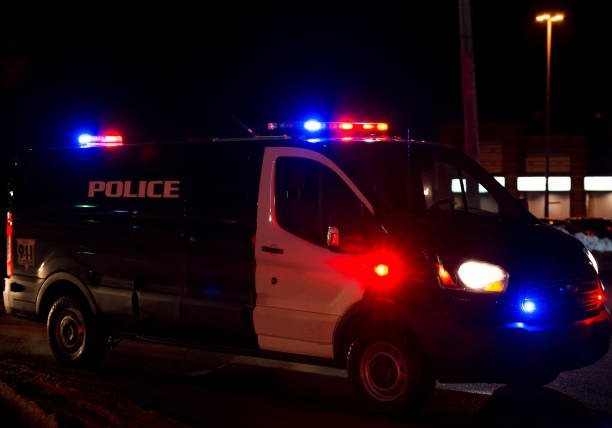
CLEVELAND, Ohio – What began as an ordinary Wednesday afternoon on Cleveland’s East Side ended in tragedy, leaving a family shattered, first responders shaken, and a community grappling with the sudden loss of a man who had lived nearly five decades and built connections that mattered. Deco Bailey, 49, died following a violent single-vehicle crash at the intersection of East 123rd Street and St. Clair Avenue —a location that will now forever be associated with grief, unanswered questions, and a life cut brutally short.
According to early reports from law enforcement and emergency medical services, Bailey was traveling at a high rate of speed when he lost control of his vehicle. The resulting crash was catastrophic: his car overturned or struck a fixed object with such force that Bailey was ejected from the vehicle. First responders arriving at the scene found him unresponsive on the pavement, his body having been thrown clear of the wreckage—a grim indication of the violence of the impact.
Despite the desperate efforts of paramedics who performed CPR at the scene, and continued medical intervention after Bailey was rushed to a nearby hospital, the 49-year-old could not be saved. He was pronounced dead shortly after arrival. The Cuyahoga County Medical Examiner’s Office will determine the official cause and manner of death, but preliminary evidence points to blunt force trauma from the crash and ejection.
This expanded obituary seeks to do what news briefs cannot: to honor Deco Bailey not merely as a traffic fatality statistic, but as a human being—a man with a story, with people who loved him, with a life that mattered before it was tragically ended.
The Crash: What We Know About the East 123rd and St. Clair Incident
The intersection of East 123rd Street and St. Clair Avenue is a known thoroughfare on Cleveland’s East Side. St. Clair Avenue runs east-west as a major arterial road, while East 123rd Street is a north-south connector. The area is a mix of residential homes, small businesses, and vacant lots—a working-class neighborhood where children play on sidewalks and neighbors keep an eye on one another’s properties.
On the day of the crash, which occurred in the afternoon (the specific date has not been released in the original notice, though the obituary is current as of late April 2026), a routine drive turned into a scene of emergency lights, twisted metal, and desperate shouts.
Police have not yet released the exact speed Bailey was traveling, but the phrase “high rate of speed” in the original report suggests he was driving well above the posted limit—typically 25 to 35 mph on city streets. Speed is a leading factor in fatal crashes nationwide. According to the National Highway Traffic Safety Administration (NHTSA), speeding was a factor in nearly one-third of all traffic fatalities in recent years. When combined with ejection from a vehicle—often due to lack of seatbelt use—the fatality rate skyrockets.
It is not yet known whether Deco Bailey was wearing a seatbelt at the time of the crash. Investigators will examine the wreckage for seatbelt indicators, as well as potential contributing factors such as mechanical failure, medical emergency, distraction, or impairment. The Cleveland Division of Police has not announced any charges or citations, as this remains an active investigation.
What is known is that first responders arrived swiftly. They found Bailey on the ground, not breathing, with no detectable pulse. CPR was initiated immediately—a physically exhausting, often futile effort that paramedics perform anyway, because every second counts and because the alternative is doing nothing. They pumped his chest, breathed air into his lungs, and loaded him into an ambulance that screamed toward the nearest trauma center.
At the hospital, doctors and nurses continued the fight. But the damage was too severe. Deco Bailey was pronounced dead. The official time of death has not been released.
Who Was Deco Bailey? A Life at 49
Behind the police report and the crash scene reconstruction was a man. Deco Bailey was 49 years old—an age where many people are in their prime. Not young anymore, but not old. At 49, a person has typically raised children, built a career, weathered storms, and learned lessons that only time can teach. They have history. They have scars. They have stories.
The original obituary describes Bailey as “more than the circumstances of this tragedy.” That is an essential distinction. In the hours after a fatal crash, social media and news comments sections often reduce the victim to the manner of their death: “He was speeding.” “He wasn’t wearing a seatbelt.” These statements may be factually true, but they are not the whole truth.
Deco Bailey, the memorial insists, “was a man with a story, shaped by experiences, relationships, and the moments that defined his life.” He was a father to someone. A son to someone. A friend to many. He had favorite foods, pet peeves, inside jokes, and a laugh that those who knew him can still hear in their memory. He had made mistakes—everyone has—and he had successes. He had people who loved him.
To some in Cleveland, he was a familiar face on the East Side. To others, a trusted friend or a beloved family member. To all who knew him, the obituary says, “he was someone who belonged.” That sense of belonging is now gone, replaced by the hollow absence of a man who should have had more years ahead of him.
The Intersection of Grief: Family, Friends, and Community
The loss of Deco Bailey is not a solitary tragedy. It radiates outward in concentric circles: first to his immediate family, then to his extended relatives, then to his friends, then to his neighbors and coworkers, and finally to the broader Cleveland community.
For his family, the pain is immeasurable. The original notice acknowledges this directly: “To his family, the pain is immeasurable. No words can fully ease the weight of such a loss.” These are not empty platitudes. When a person dies suddenly and violently, the family is thrust into a parallel universe of funeral planning, police interviews, and the bureaucratic nightmare of death certificates and life insurance claims—all while trying to breathe through the suffocating fog of grief.
For his friends, the loss is different but no less real. They will gather at bars and living rooms, telling stories that make them laugh and cry in the same sentence. They will raise glasses to his memory. They will text his phone number knowing they will never get a reply. They will struggle with the unfairness of it: he was only 49. They expected decades more.
For the Cleveland community, the loss is a reminder of something uncomfortable. Car crashes happen every day. Most of them are not fatal. But some are. And when they are, the victim is not a statistic. He is someone’s Deco. Someone’s father, brother, friend.
The First Responders: Bearing Witness to Tragedy
The original notice mentions the actions of first responders who “arrived swiftly, working with urgency and determination, performing CPR at the scene in a desperate effort to save his life.” It is worth pausing to honor these men and women.
Paramedics, police officers, and firefighters see things that most people will never see. They arrive at scenes of unimaginable violence—twisted metal, broken glass, blood on asphalt—and they do their jobs. They do not ask whether the victim was speeding or wearing a seatbelt. They do not judge. They simply work.
CPR is violent itself. It breaks ribs. It is exhausting. And even when performed perfectly, it often fails. But paramedics do it anyway, because once in a while, it works. Once in a while, someone wakes up. For Deco Bailey, it did not work. But not for lack of trying.
The notice praises their “tireless efforts” and “continued care” even after Bailey was transported. That matters. That is the difference between a system that cares and a system that goes through the motions. Cleveland’s first responders, in this case, cared.
The Fragility of Life: A Painful Reminder
One of the recurring themes in the original obituary is the fragility of life. The notice states: “The suddenness of his passing serves as a painful reminder of how fragile life can be. One moment can change everything, leaving behind not only grief but also reflection.”
This is not a new insight, but it is a necessary one. Human beings have a remarkable capacity to believe that tragedy happens to other people. We buckle our seatbelts more out of habit than fear. We speed because we are late, because we are angry, because we are distracted, because we have done it a hundred times before without consequence.
But the hundred-and-first time can be the last time.
Deco Bailey’s death is a reminder that the choices we make behind the wheel have consequences—not just for us, but for everyone who loves us. A moment of poor judgment, a second of lost control, and a family is forever changed.
The Investigation: What Happens Next
As of this writing, authorities continue to investigate the circumstances surrounding the crash. The Cleveland Division of Police typically conducts the following in a fatal crash:
1. Scene reconstruction – Measuring skid marks, debris scatter, vehicle resting position, and damage patterns to determine speed and point of impact.
2. Vehicle mechanical inspection – Checking for brake failure, tire blowouts, steering issues, or other mechanical causes.
3. Toxicology testing – The Cuyahoga County Medical Examiner will test for alcohol, drugs, and prescription medications.
4. Witness interviews – Anyone who saw the crash or Bailey’s driving in the moments leading up to it.
5. Surveillance footage review – Cameras from nearby businesses or homes may have captured the crash.
Depending on the findings, the case may be closed as an accident, or if impairment or recklessness is found, there could be legal consequences—though with Bailey deceased, criminal charges are moot. The investigation’s primary purpose now is to provide answers to the family and to the public.
How to Honor Deco Bailey: For Those Who Grieve
If you are a member of the Cleveland community, a friend of Deco Bailey, or simply someone moved by this tragedy, here are meaningful ways to respond:
1. Attend any memorial services. Check with local funeral homes or the family’s social media posts for information on visitation and funeral arrangements. Your presence matters.
2. Reach out to the family. A card, a meal, a phone call through a mutual friend—these small gestures mean everything to people drowning in grief.
3. Share a memory. If you knew Deco, tell a specific story. Not “he was a good guy,” but the time he helped you move, the joke he always told, the way he made you feel seen. Specific memories are legacies.
4. Drive differently. This is the most practical tribute. Slow down. Buckle up. Put your phone away. Do not become the next headline. Honor Deco by protecting your own life and the lives of others.
5. Donate to a traffic safety organization. Groups like Safe Roads Alliance or Mothers Against Drunk Driving (MADD) work to prevent exactly this kind of tragedy.
A Final Blessing
The original obituary closes with a simple, profound prayer:
May he rest in peace.
But before that, it offers something more: a commitment to remembrance. “Deco Bailey will be remembered not for the tragedy that took him, but for the life he lived and the connections he made. His memory will endure—in the hearts of those who loved him, in the stories shared, and in the moments that continue to carry his presence forward.”
That is the task now. For his family, for his friends, for Cleveland: to carry him forward.
To the family of Deco Bailey: You have lost someone irreplaceable. Grieve as you need to. Accept help when it is offered. Do not let anyone tell you how long to mourn. Your love for him does not end.
To his friends: Hold each other up. Say his name. Do not let him become a memory that fades.
To the city of Cleveland: Slow down. Look out for one another. And when you pass the intersection of East 123rd and St. Clair, think of him. A man died there. He was someone’s everything.
Deco Bailey. 49 years old. Cleveland, Ohio. Gone too soon. Never forgotten.
Leave a Reply