
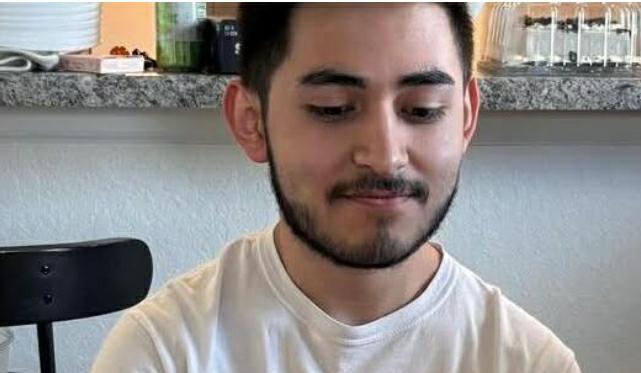
SAN ANTONIO, Texas – There is a particular heaviness that settles over a community when a young person dies. It is not the expected grief of old age or the slow farewell of a long illness. It is a sharp, disorienting sorrow that arrives without warning and refuses to leave quietly. That heaviness now rests over San Antonio, Texas, following the death of Jerry Davila III, a young student whose passing on April 27, 2026, has left family, friends, and classmates reeling.
Jerry was, by all accounts in the memorial notice, a young man whose life—though far too brief—was filled with meaning. He was a student, a family member, a friend, and a presence in his community. At the time of his passing, he was engaged in the essential work of growing up: learning in classrooms, forming friendships, dreaming about a future that now will never arrive.
This expanded tribute honors Jerry Davila III not as a headline but as a human being. It explores who he may have been, what his loss means to San Antonio, and how a community can come together to support one another in the aftermath of an unimaginable loss.
Who Was Jerry Davila III? A Life of Meaning, Briefly Lived
The original memorial notice does not specify Jerry’s exact age, though the phrase “young student” coupled with his status as “Jerry Davila III” (the third, suggesting a family naming tradition) places him likely in his teens or early twenties. What is clear is that he was in a formative stage of life—a time of growth, learning, and the building of identity.
To those who knew him, Jerry Davila III was not a case number or a statistic. He was a person with habits, preferences, quirks, and a unique way of moving through the world. The memorial describes him as “a source of joy and connection”—words that speak to someone who brought warmth into rooms, who made others feel seen, who laughed easily and often.
In San Antonio, a city of nearly 1.5 million people known for its rich blend of Mexican-American heritage, the Alamo, the River Walk, and a deep sense of community pride, Jerry was one of thousands of students navigating schools, friendships, and family expectations. But to his loved ones, he was irreplaceable.
The notice also states that Jerry’s life “was filled with meaning in the lives of those who knew him.” This is an important distinction. Some people measure meaning in accomplishments: degrees earned, awards won, money made. Others measure meaning in relationships: the people they loved, the people who loved them, the small kindnesses exchanged over years. Jerry, it seems, belonged to the latter category.
The Role of the Student: A Journey Interrupted
Jerry was a student. That simple word carries immense weight. Being a student means waking up to alarms, packing backpacks, sitting in classrooms, raising hands or staying silent, taking tests, passing or failing, learning lessons both academic and personal. It means being surrounded by peers who are also figuring out who they are. It means having teachers who see potential and try to draw it out.
For Jerry, that journey has been interrupted. He will not finish the semester. He will not walk across a graduation stage. He will not have the chance to look back on his school years with the fondness that comes with distance. His classmates will return to classrooms where his seat will be empty. His teachers will mark him absent and then, eventually, will receive the news that he will never return.
The memorial notice notes that Jerry’s “presence in the classroom and among friends brought moments that will now be cherished even more deeply.” This is one of the cruel truths of grief: we often do not realize how precious ordinary moments are until they become impossible. The way Jerry laughed at a joke. The way he said goodbye at the end of the day. The way he looked when he was concentrating on a difficult problem. These moments were once unremarkable. Now they are treasures.
The Family: Jerry Davila III and a Naming Tradition
The name “Jerry Davila III” indicates that Jerry was the third person in his family line to carry that name, following his father (Jerry Davila Jr.) and his grandfather (Jerry Davila Sr.). In many cultures, naming a child after a parent or grandparent is an act of honor, continuity, and hope. It says: You are part of something larger than yourself. You carry our history. We trust you with our name.
For the Davila family, the loss of Jerry III is not just the loss of a son or grandson. It is the loss of a future bearer of the family name. It is the breaking of a chain. The next generation of Davilas will not include a Jerry IV unless another child is given that name in his honor, which, while possible, carries its own emotional weight.
The family is now facing the unimaginable: planning a funeral for someone who should have outlived them. Parents should not bury their children. Grandparents should not bury their grandchildren. But in the Davila household, that is now the terrible reality.
The Void: What Grief Feels Like
The memorial notice uses the phrase “profound void” to describe what Jerry’s passing has created. This is not hyperbole. Grief researchers have long noted that the death of a loved one creates a literal psychological and emotional absence. The brain is wired to expect certain people to be present—at certain times, in certain places, for certain occasions. When that person is suddenly and permanently absent, the brain experiences a form of disorientation.
For Jerry’s family, the void will appear in a thousand small moments: the empty chair at the dinner table, the silent phone, the unopened text message thread. For his friends, it will appear at school, at hangouts, at places where Jerry used to stand. For his teachers, it will appear in the roster, in the lack of a hand raised, in the quiet that replaces his voice.
The notice says this void “cannot be replaced.” That is true. People often try to fill grief with distractions, with activity, with new relationships. But the void left by a specific person is specific to that person. No one else can be Jerry. No one else can fill his exact space in the world. The void will remain. Over time, those who love Jerry will learn to live alongside it.
San Antonio: A City That Mourns Together
San Antonio is a city with a deep sense of community. It is a place where people know their neighbors, where high school football games draw crowds, where Fiesta brings the entire city together in celebration. It is also a city where grief is often shared publicly, whether through candlelight vigils, memorial masses at historic missions like the Alamo or Mission Concepción, or simply through neighbors bringing food to a grieving family.
In the wake of Jerry’s passing, that communal instinct has likely already kicked in. Friends have probably gathered to share stories. Classmates have probably signed cards or created social media tributes. The school Jerry attended has likely made counselors available to students struggling with the news.
The memorial notice explicitly calls for community support: “In times like these, a community comes together not only to mourn, but to support one another.” This is a crucial reminder. Grief can be isolating. Mourners may feel that no one understands their pain. But a community that shows up—with meals, with hugs, with silent presence—can make the unbearable slightly more bearable.
The Fragility of Life: A Reminder for the Living
One of the functions of an obituary or memorial is to remind the living of their own mortality. The notice states that Jerry’s loss is “a reminder of how fragile life can be, and how important it is to hold close the people who matter most.”
This sentiment can feel trite when written in a sympathy card. But when a young person dies suddenly, it stops being a cliché and becomes a truth. Life is fragile. Plans can be interrupted. A Tuesday afternoon can be ordinary until suddenly it is not.
For those reading about Jerry’s death—whether in San Antonio or elsewhere—the appropriate response is not just sadness. It is also action. Call your parents. Hug your children. Tell your friends you love them. Do not wait for a funeral to say what someone means to you. Jerry’s loved ones do not have that chance anymore. You still do.
The Absence of Details: Why the Cause of Death Is Not Specified
The original memorial notice does not specify how Jerry Davila III died. It does not mention an accident, an illness, or any other cause. This silence is intentional and should be respected.
Families choose to withhold the cause of death for many reasons: privacy, dignity, ongoing investigations, or simply a desire to focus on the life lived rather than the manner of death. In the case of a young student, the cause could range from a car accident to an undiagnosed medical condition to something else entirely. Without official confirmation, speculation is not only unhelpful but potentially harmful.
What is known is that Jerry died on April 27, 2026. What is known is that he was a student. What is known is that he is loved and mourned. Those facts are sufficient for the purpose of a memorial.
How to Honor Jerry Davila III: A Guide for the Grieving
If you are a member of the San Antonio community, a classmate of Jerry’s, or someone who wishes to pay respects, here are meaningful ways to respond:
1. Attend any memorial services. At the time of this writing, no public service has been announced. Check with local funeral homes or the school Jerry attended for information. Your presence matters more than your words.
2. Reach out to the family. A card, a meal, a message through a mutual contact—these gestures are deeply felt. The Davila family may not respond immediately, but they will know that their son mattered to others.
3. Share a memory. If you knew Jerry, share a specific story with his family or friends. Not “he was great” but the time he made you laugh, the time he helped you, the time he showed up when you needed him. Specific memories are gifts.
4. Support the school. If Jerry was a student at a particular San Antonio school (the name has not been specified), consider donating to that school’s counseling services or scholarship fund in his name.
5. Hold your own loved ones close. This is the most universal tribute. Do not wait. Call your mother. Text your friend. Say “I love you” like you mean it. Jerry cannot do those things anymore. You can.
The Broader Context: Young Death in America
According to the Centers for Disease Control and Prevention (CDC), the leading causes of death for children, teenagers, and young adults vary by age group. For those aged 15–24, unintentional injury (including car accidents and drug overdoses) is the leading cause, followed by suicide, homicide, and cancer. For younger children, causes shift to include congenital conditions and accidents.
Without official disclosure, it is impossible to know where Jerry’s case fits. But the broader truth is that thousands of American families each year experience exactly what the Davila family is experiencing now: the sudden, senseless loss of a young person who had not yet had the chance to fully live.
These deaths are not just statistics. They are empty bedrooms, unfinished homework assignments, unopened birthday presents, and parents who will never be the same.
A Final Blessing
The original memorial notice closes with a three-part blessing, and it is fitting to close this expanded tribute in the same spirit:
May Jerry Davila III be remembered for the life he lived and the impact he made in his own way.
May his memory bring comfort to those who mourn him.
And may he rest in peace, forever held in the hearts of those who loved him.
For Jerry’s parents: You gave him a name that spanned generations. You gave him love that will outlive you. Hold onto that.
For Jerry’s friends: You are too young to carry this weight. Lean on each other. Cry when you need to. Say his name out loud. He is not gone as long as he is remembered.
For the San Antonio community: Show up. Bring food. Sit in silence. Do not look away from the family’s pain. Your presence is a prayer.
And for Jerry: Rest. You were here. You were loved. You mattered.
In memoriam: Jerry Davila III, student, son, friend, and member of the San Antonio community. April 27, 2026. Forever missed. Forever held.
Leave a Reply