
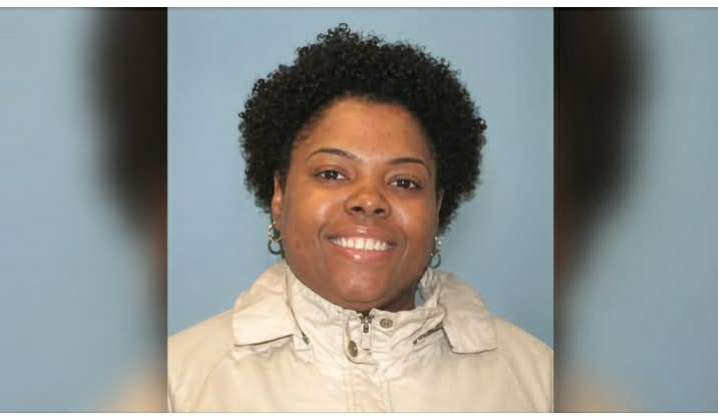
CLEVELAND, Ohio – For nearly six years, the family of Paige Coffey lived in a particular kind of hell. It is not the hell of certain grief, but the purgatory of ambiguity—the sleepless nights wondering if she was alive somewhere, hurt, held against her will, or perhaps simply choosing to disappear. Every unread text message, every unanswered phone call, every birthday that passed without her voice was a fresh wound.
Now, that purgatory has ended. But the truth has brought no relief—only a different, more permanent agony.
Human remains discovered inside a garbage bag at a vacant property in Cleveland, Ohio, have been positively identified as Paige Coffey, the young woman who vanished in May 2019 at just 27 years of age. The identification closes a missing persons case that spanned nearly half a decade, but it opens a far darker chapter: a homicide investigation, a search for justice, and a community’s collective reckoning with how a woman could disappear, be reduced to refuse, and remain hidden for years while those who loved her never stopped hoping.
This is her story—not just how she died, but who she was, and why her memory deserves more than a headline.
The Disappearance: A Silence That Spoke Volumes
May 17, 2019 was supposed to be a day of celebration. Across America, families were calling, texting, and visiting one another for Mother’s Day. In the Coffey household, the day arrived with a familiar ritual: Paige always called her mother on Mother’s Day. Always. It was not an obligation but a tradition, a small but sacred thread of connection between a mother and a daughter navigating adult life.
That day, the phone did not ring.
Paige’s family grew concerned immediately. This was not like her. Paige was not a ghost; she was present, reliable, and deeply connected to her loved ones. When she failed to make that customary Mother’s Day call, her family knew something was terribly wrong. They reported her missing that same day.
But here is the cruel math of missing persons cases: the first hours are golden, the first days are critical, and the first weeks are desperate. By the time Paige was reported missing, she had already been gone for ten days.
The Last Sighting: Home Depot at Steelyard Commons
Investigators from the Cleveland Division of Police immediately began retracing Paige’s final known movements. What they found was haunting: surveillance footage from May 7, 2019 — ten full days before she was reported missing—captured Paige at a Home Depot located in Cleveland’s Steelyard Commons, a large shopping center on the city’s near west side.
She was not alone.
The footage showed Paige accompanied by a man she had reportedly been dating at the time. The man’s identity was not immediately released to the public, but law enforcement sources later confirmed that he became the focus of the investigation. After that brief appearance on grainy security video, Paige Coffey vanished from every camera, every witness statement, every digital trail.
She was never seen alive again by anyone who knew her.
The Long Years: A Family’s Relentless Hope
From May 2019 until early 2025, the Coffey family lived in a state of suspended animation. They updated social media pages with Paige’s photo. They begged for tips. They called detectives when they couldn’t sleep. They searched vacant lots, posted flyers on telephone poles, and attended vigils for other missing women while secretly terrified they would someday attend one for Paige.
Law enforcement continued to work the case, but leads grew cold. The Cleveland Division of Police classified Paige as a missing/endangered person, but without new evidence, the investigation slowed. Detectives periodically re-interviewed witnesses, checked hospital records, and ran her name through national databases. Nothing.
Paige’s former boyfriend, whom investigators had previously identified as a person of interest, was interviewed multiple times. According to sources familiar with the investigation, he provided statements that were inconsistent or evasive. But without a body, without a crime scene, without probable cause, no arrest was made.
The family refused to give up. But privately, they began to prepare for the worst.
The Discovery: A Garbage Bag in a Vacant Cleveland Property
In early 2025, something shifted. A property owner or maintenance crew (the exact party has not been named by police) was conducting a cleanup at a vacant property somewhere in Cleveland. The precise location has not been disclosed to protect the integrity of the investigation, but sources indicate it was within the city limits, not far from the Steelyard Commons area.
During the cleanup, workers discovered a garbage bag that seemed out of place—too heavy, too sealed, too suspicious for ordinary trash. When they opened it, they found human remains.
Police were called immediately. The Cuyahoga County Medical Examiner’s Office took custody of the remains. The condition of the remains suggested they had been there for a long time—years, not months. Investigators began the painstaking process of forensic identification: dental records, DNA comparison, and anthropological examination.
The confirmation came days later: the remains were those of Paige Coffey, missing since May 7, 2019. She would have been 33 years old at the time of identification.
The Aftermath: From Missing Person to Homicide Investigation
The discovery transformed a missing persons case into a confirmed homicide investigation. The manner of death has not been publicly released pending further forensic analysis, but the fact that Paige’s remains were found inside a garbage bag at a vacant property strongly suggests foul play and an attempt to conceal the body.
The Cleveland Division of Police has reopened the case with renewed urgency. Detectives are now treating the property where the remains were found as a secondary crime scene—a dump site rather than necessarily the location where Paige was killed. Investigators are tracing ownership records of the vacant property, attempting to determine who had access to it in 2019 and the years following.
The man Paige was seen with at the Home Depot—her former boyfriend—remains a person of interest. He has not been publicly named by police, and no charges have been filed. However, legal experts note that the discovery of a body often breaks open cold cases because it allows prosecutors to charge murder, not just rely on circumstantial evidence of disappearance.
Who Was Paige Coffey?
Behind the police jargon and forensic details is a human being. Paige Coffey was 27 years old when she vanished. By all accounts from family and friends, she was a woman with a bright smile, a warm laugh, and a future that held promise.
She was a daughter—the child who called her mother on Mother’s Day without fail, who remembered birthdays, who showed up for family dinners. She was a friend to those who knew her, someone you could call at 2 a.m. if you were in trouble. She had dreams, whether of career, travel, motherhood, or simply stability—dreams that were never realized because someone took her life before she could live it.
In the years since her disappearance, those who loved Paige have carried her memory like a fragile flame. They have posted on social media every May 7 and May 17, writing “Still missing you” and “We haven’t forgotten.” They have attended support groups for families of missing persons. They have watched other families get answers—sometimes good, sometimes terrible—while they remained in the fog.
Now the fog has lifted, revealing a landscape of grief.
The Pain of Closure: When Answers Bring No Peace
There is a misconception that families of missing persons want “closure.” Many reject that word. Closure implies an ending, a tying of loose threads. But what family really wants is truth—and even truth cannot bring back the dead.
For the Coffey family, the identification of Paige’s remains is both an answer and an open wound. They no longer have to wonder if she might walk through the door someday. But they must now plan a funeral—something they have dreaded for six years. They must now confront the reality that Paige did not simply leave or get lost. Someone put her in a garbage bag. Someone left her in a vacant building to rot, unseen, unremembered, until workers stumbled upon her by accident.
That knowledge is not peace. It is fuel for a different kind of fire.
The Investigation: What Comes Next?
The Cleveland Division of Police has not announced any arrests, but multiple avenues of investigation are now active:
1. Forensic analysis of the remains to determine cause and approximate time of death.
2. Trace evidence from the garbage bag and the vacant property, including fingerprints, DNA, and fibers.
3. Re-interviewing witnesses, particularly the former boyfriend and anyone who saw Paige in the days before May 7, 2019.
4. Digital forensics: reviewing old phone records, social media messages, and location data that may have been overlooked in 2019.
5. Property records: determining who owned, rented, or had access to the vacant property in 2019.
The Cuyahoga County Prosecutor’s Office will likely present evidence to a grand jury once the investigation reaches a critical mass. Depending on the evidence, charges could include murder, felonious assault, abuse of a corpse, and tampering with evidence.
A Call for Justice
Paige Coffey’s story, sadly, is not unique. Across the United States, thousands of missing persons cases—particularly those involving young women, particularly those involving domestic or dating relationships—go unsolved for years. Some are never solved. Some remain open forever, leaving families to die without ever knowing what happened to their child.
Paige was fortunate in one grim respect: her remains were found. That is not true for everyone. But “fortunate” is a cruel word in this context. No family should have to consider the discovery of their loved one’s body in a garbage bag as a mercy.
The Coffey family has not yet spoken publicly at length since the identification, and they deserve privacy as they process this devastating news. But in time, they will likely speak—not for revenge, but for remembrance. Not for headlines, but for the hope that Paige’s story might prevent another young woman from disappearing into the silence.
In Loving Memory: Never Forgotten
The original tribute ended with these words:
“May Paige Coffey be remembered not for the tragedy that took her, but for the life she lived. May her loved ones find strength through their grief. And may her soul rest in peace, never forgotten.”
That is the only fitting conclusion. Paige Coffey was not a garbage bag. She was not a coroner’s report. She was not a person of interest’s alibi. She was a daughter who called her mother on Mother’s Day. A woman who shopped at Home Depot on an ordinary Tuesday. A human being who deserved to grow old, to laugh, to cry, to fail, to succeed, to love, to be loved.
Someone took all of that from her. Now, the work begins to find out who—and to ensure that Paige Coffey’s name is spoken not as a tragedy, but as a testimony.
Anyone with information regarding the disappearance or death of Paige Coffey is urged to contact the Cleveland Division of Police Homicide Unit at (216) 623-5464. Anonymous tips can be submitted to Crime Stoppers of Cuyahoga County at (216) 252-7463.
Leave a Reply